
For veterinary clinics
“Juno got through the night well.”
Anyone leaving their animal at the clinic overnight drives home without it and sleeps badly. A photo from the ward the next morning and one short line — that is all it takes to turn a long night into a bearable one.
What this is not about: findings, prognoses or advice — nor about opening a channel someone then has to tend. It is about a sign of life. Everything medical you discuss as before, in person.
01 · Example
What a ward message looks like
A quick message with a placeholder for the animal's name, plus a photo from the kennel. On sending, the right name appears there — whoever walks the round anyway does it in passing.
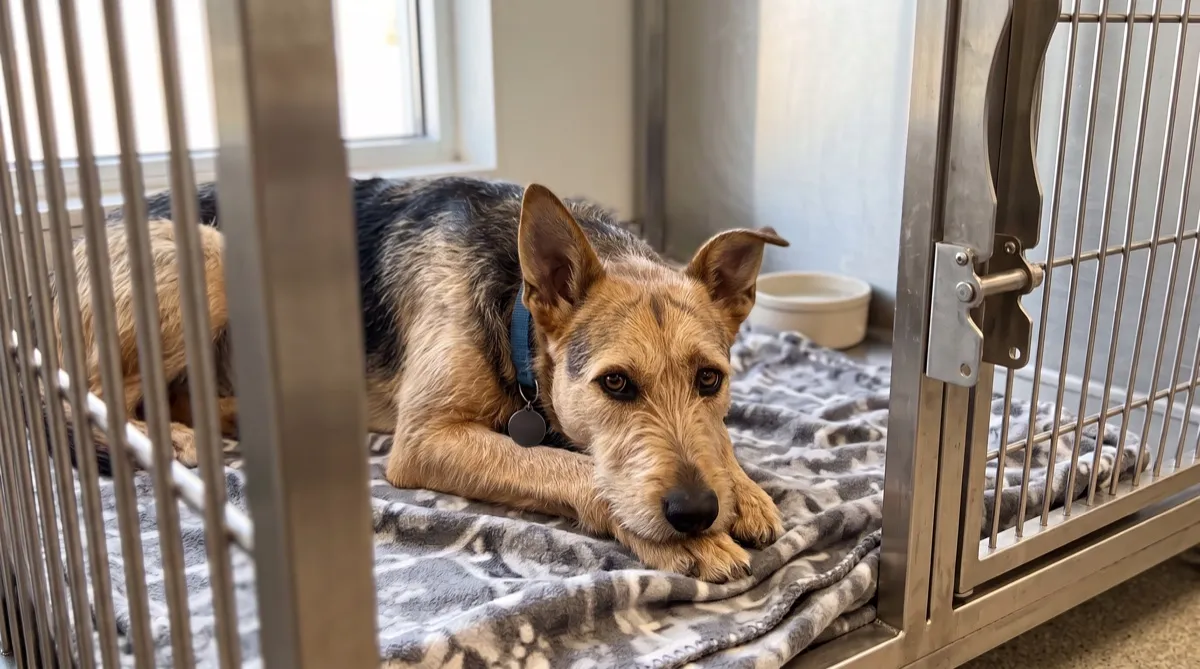 Photo from the kennel, 7:40 am
Good morning! Juno got through the night well. We will be in touch again after the round.
The building block holds a placeholder for the animal's name — on sending it reads Juno.
Replying this way is usually switched off. The message is a sign of life, not an open channel — it ties up nobody on your team.
02 · Effect
Why one line makes such a difference
Fewer calls from worried owners
Those who hear nothing call — usually at the worst moment, often twice. That is exactly the point: a message in the morning answers the question before it becomes a call. The clinics doing it notice at the phone first.
It costs you half a minute
Take a photo, pick the quick message, send. The text is already there, only the name changes. And nothing follows: because replying is switched off, no thread arises that someone has to keep an eye on.
You promise nothing by it
A sign of life is neither information nor a finding. That is precisely why it can be sent even when nothing has been decided — and that is exactly when the owner needs it most.
It stays with the animal, not the person
The message sits in the animal's thread. Whoever takes the next shift sees what was sent yesterday and does not repeat it — or picks up from there.
03 · Day to day
How it fits the routine
Three things decide whether this still runs after two weeks: how the owner joins, how the ward keeps the overview, and what comes of it in the end.
- 1
The owner joins by QR code
At admission they scan the code on your notice and are in the animal's thread. No account setup at the desk, no form. And if they come back months later, the same code is enough.
- 2
The list keeps itself
When an animal goes home, you remove the chat. Then the list holds only those currently in — whoever walks the round sees today's cases instead of three hundred old ones. Nothing is lost: when the same owner scans again on the next visit, the thread is back, with everything discussed last time.
- 3
At the end there is a review that was earned
Someone who was afraid all night and got a photo in the morning remembers it. Ask for a review after discharge — on Google or wherever you want to be found. Not because you asked, but because the moment is right.
04 · Limits
Where the ward message ends
So that it remains what it is, three things are explicitly not its job.
- 1
No findings and no prognosis. What the examination showed and what happens next belongs in a conversation — not in a morning message.
- 2
No bad news. If the condition worsens, you call. Learning of a deterioration in writing, with nobody to ask, is worse than no message at all.
- 3
No promise of frequency. Writing once a day creates the expectation of daily. Say at admission what the owner can count on — then a quiet day is not an ominous sign either.
05 · Afterwards
What becomes of the first photo
Anyone who has written once during the stay has the owner in the animal's thread — and with it the route for discharge, the report and the question three days later. None of it has to be set up in advance. It is the same thread.
How clinics use AnimalChat otherwiseSend it once, then you will know
The effect of this message is hard to describe and easy to try. One animal, one photo, one line — the owner's reaction answers the rest.